Beldangi · Sanischare · Goldhap · Timai · Khudunabari
Since 1991
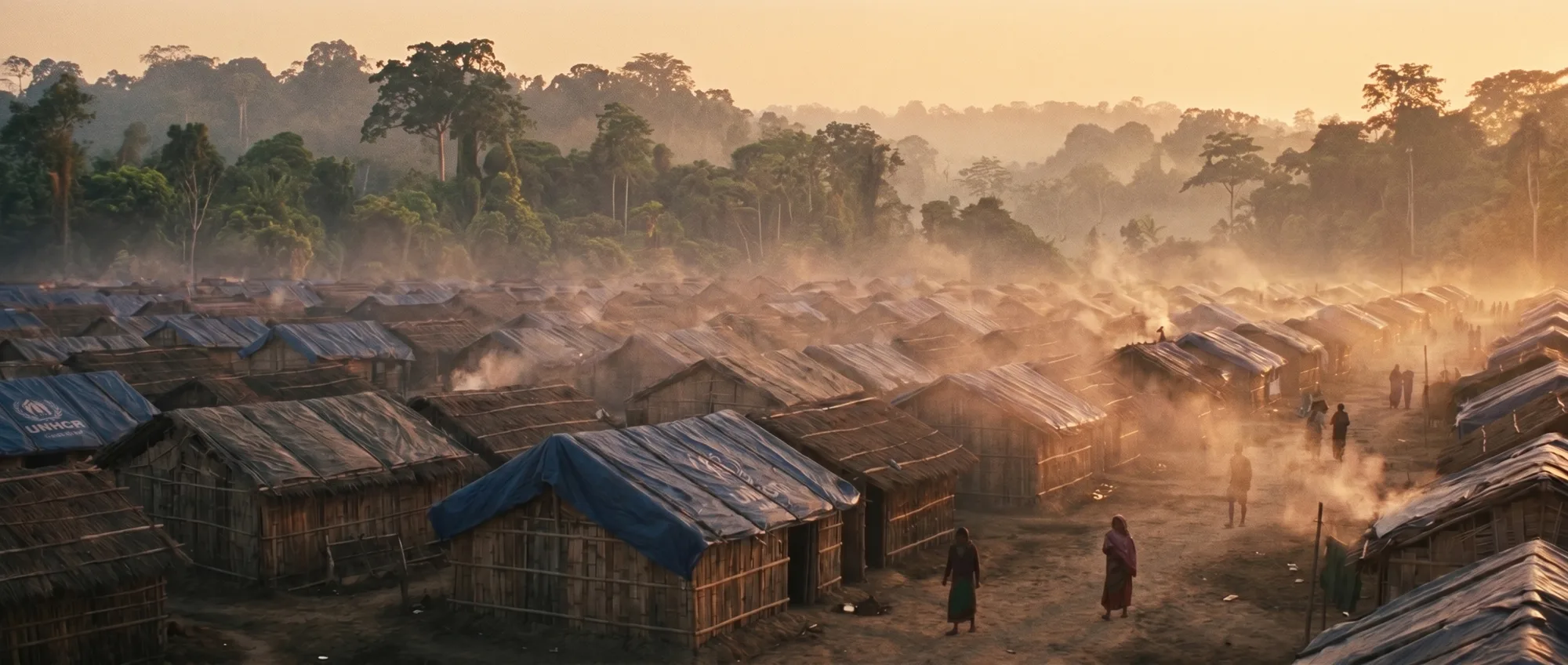
More than a hundred thousand people from Bhutan rebuilt their lives in bamboo-and-thatch camps on the plains of eastern Nepal. This is a place to remember those years — the hardship, the laughter, and the generation raised between them.
Scroll to walk the road
01Introduction
Before the World Changed
For generations, Nepali-speaking families — the Lhotshampa, “people of the south” — farmed the foothills of southern Bhutan. There were orange groves and cardamom fields, festivals and school mornings, an ordinary life under the mountains.
In the early 1990s, that life was taken apart. Citizenship policies and unrest forced tens of thousands of people to leave everything — land, homes, ancestors’ graves — and walk south, through India, to the river plains of eastern Nepal.
On the banks of the Mai River, under tarpaulin and bamboo, the camps began. No one imagined they would stand for more than twenty years — or that the children born inside them would one day carry these memories across the world.
This is the story of what was lost, and what was built anyway.
02Camp Life
Homes Made of Bamboo
Each hut was raised by hand: bamboo poles lashed with rope, walls of woven mats, a roof of thatch — later plastic sheeting stamped with UNHCR blue. Floors were swept earth, polished smooth by bare feet and daily care.
Families slept, cooked, studied, and prayed in one or two small rooms. When fire or monsoon took a hut down — and they often did — neighbours arrived with bamboo and rope before anyone asked.
“The walls were thin, but the home inside them was strong.”
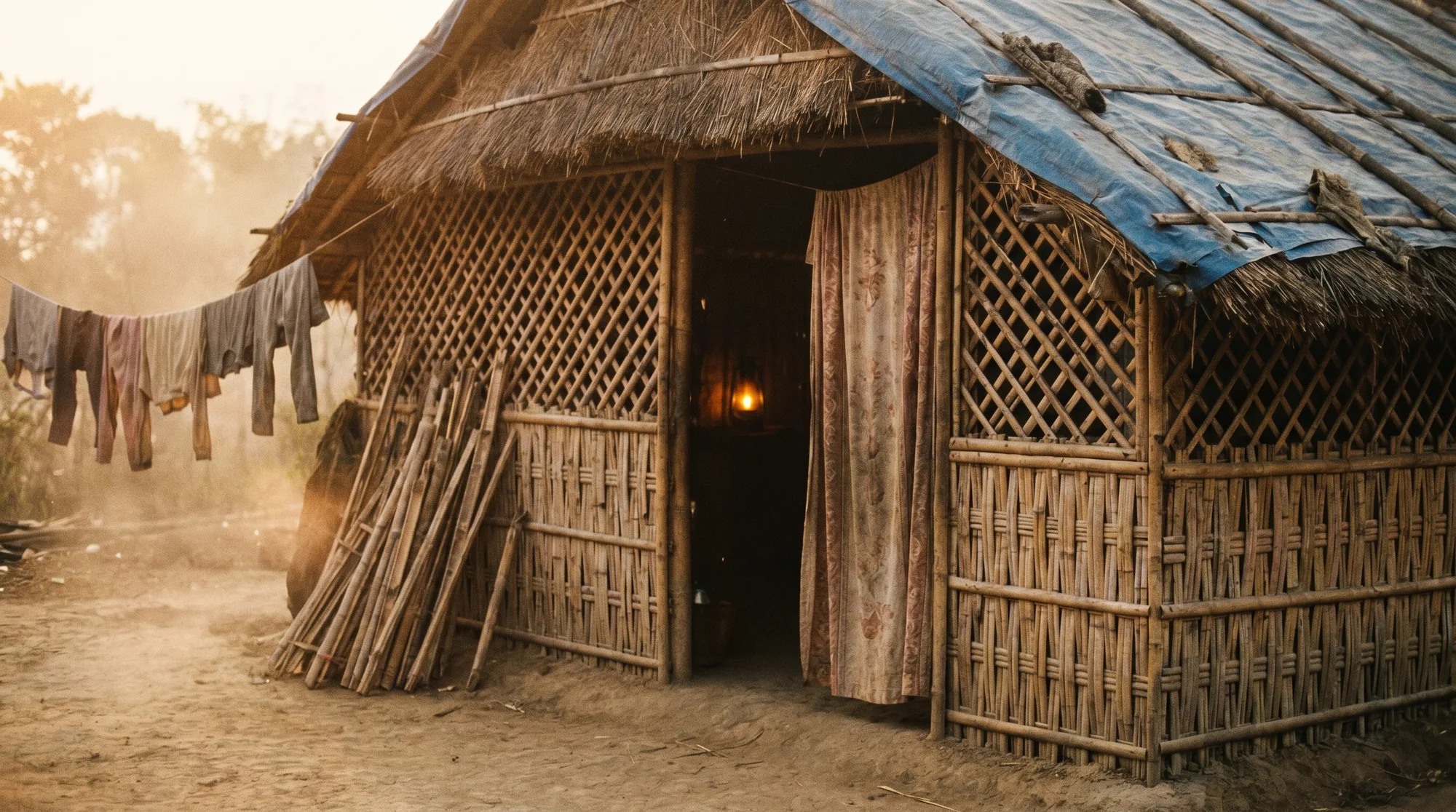
AI-rendered impression — real photographs will be added with families’ permission.
03Childhood
Children of the Dust Roads
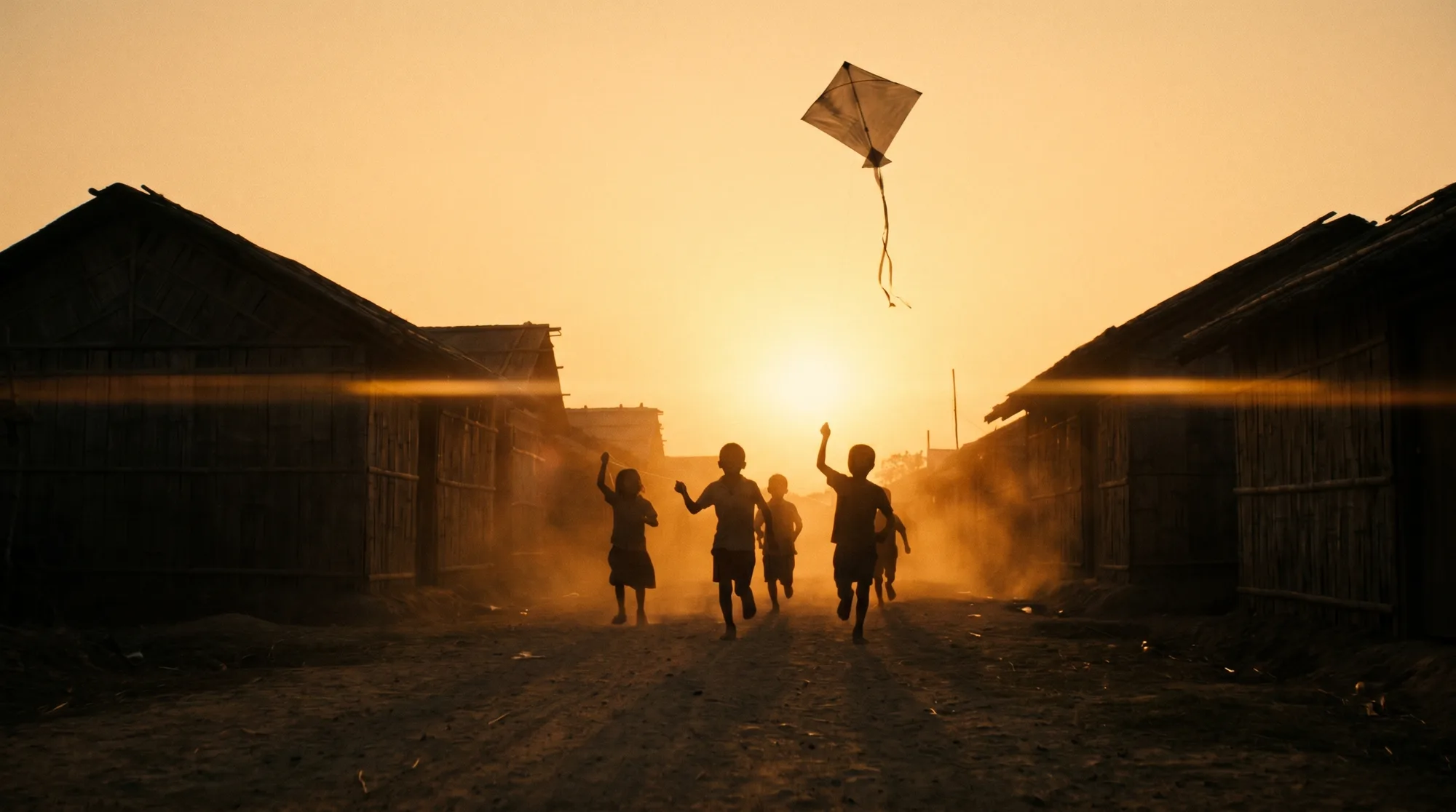
The camps were villages of children. Kites cut from plastic bags climbed the evening sky; marbles, hopscotch grids, and bicycle-rim hoops turned dust roads into playgrounds.
A whole generation was born inside the fences and knew Bhutan only as a bedtime story. Their childhood was rationed and barefoot — and still it was a childhood, loud with games and first friendships that would last across continents.
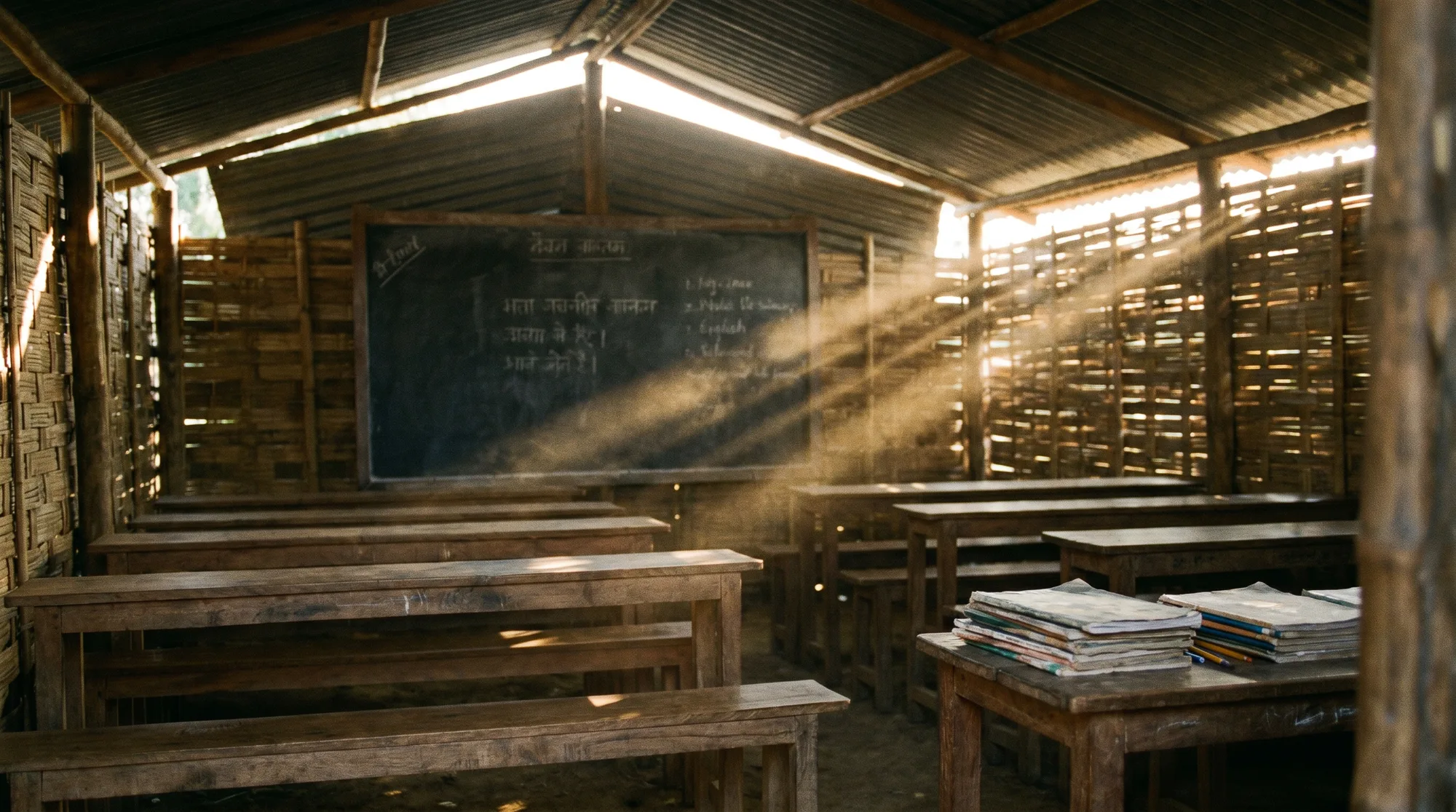
AI-rendered impression of a camp classroom.
04School
Learning Under Tin Roofs
Education became the camps’ proudest work. In bamboo classrooms with tin or thatch roofs, children sat shoulder to shoulder on the floor and on rough benches, chanting lessons over the rain.
Notebooks were rationed, chalk was precious, and monsoon water dripped on the blackboard — yet the camp schools sent thousands of students on to colleges and professions around the world. Many of today’s diaspora doctors, teachers, and engineers learned to read under those roofs.
“They could not give us a country, so our teachers gave us the world.”
05Struggles
The Hard Days
The camps held suffering that statistics cannot carry: grief, illness, and the ache of statelessness. We tell these days not for pity, but because surviving them was an act of quiet courage repeated every morning.
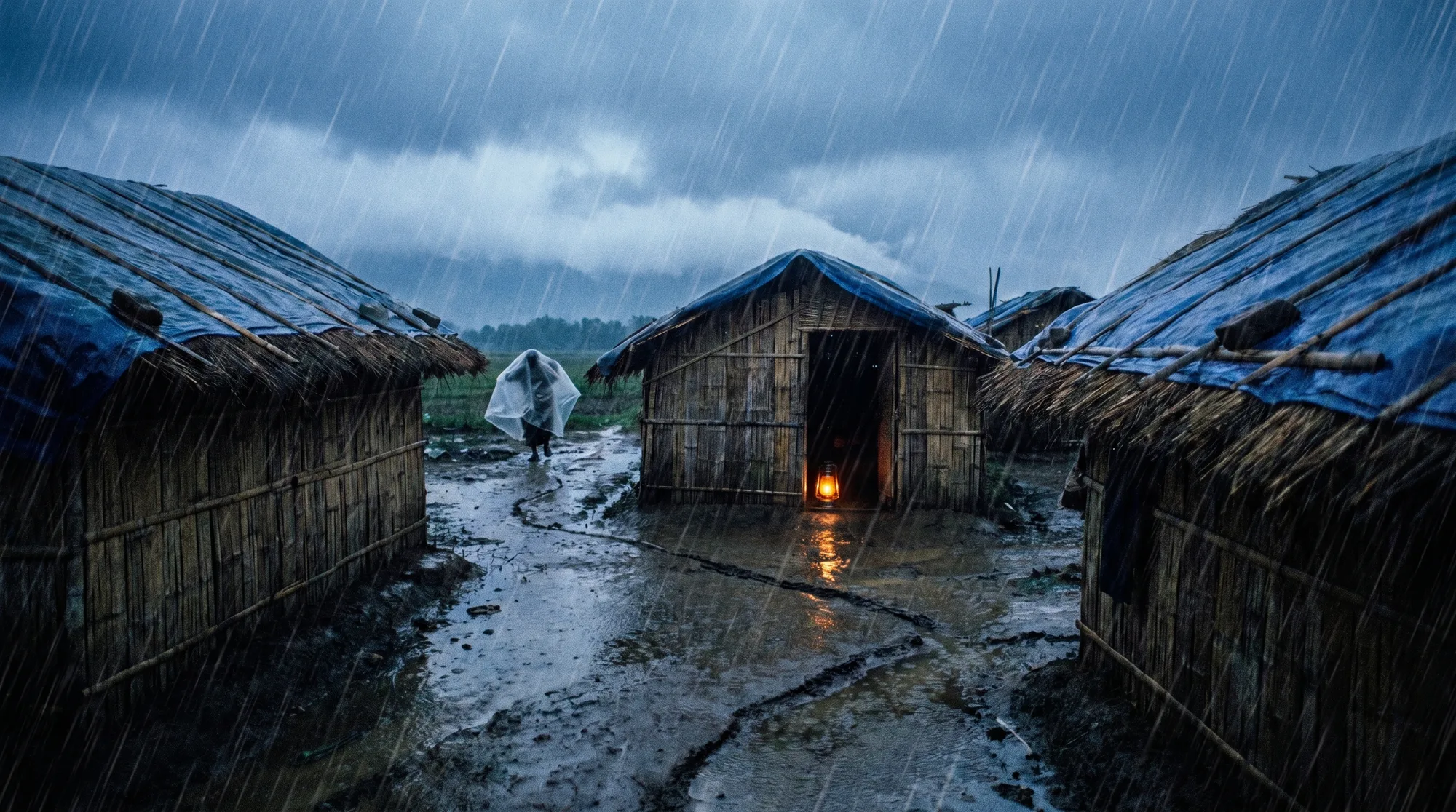
Monsoon
Every June the rains came. Roofs leaked, paths became rivers of mud, and families lay awake listening to the bamboo strain against the wind.
Fire
Dry-season fires could take hundreds of huts in an hour. People rebuilt — again and again — with whatever bamboo the forest and aid agencies could spare.
Ration lines
Life was measured in coupons: rice, lentils, oil, kerosene. Standing in line under the sun was a chore shared by every family, every fortnight.
Waiting
The deepest hardship was time itself. Years of talks came and went, and a temporary shelter quietly became two decades of life on hold.
“We learned that rain always stops. That is not a small thing to know.”
06Good Days
Small Joys
Memory keeps the bright days too. Ask anyone who grew up in the camps and the stories tumble out — festivals, games, songs, small triumphs that felt enormous.
Dashain mornings
New clothes once a year, tika on every forehead, bamboo swings (ping) creaking over the whole camp.
Volleyball at dusk
A sagging net between two poles, and the day’s worries paused until the ball was lost in the dark.
Radio nights
One radio, twenty listeners — Nepali songs, BBC news, and football crackling through the lanes.
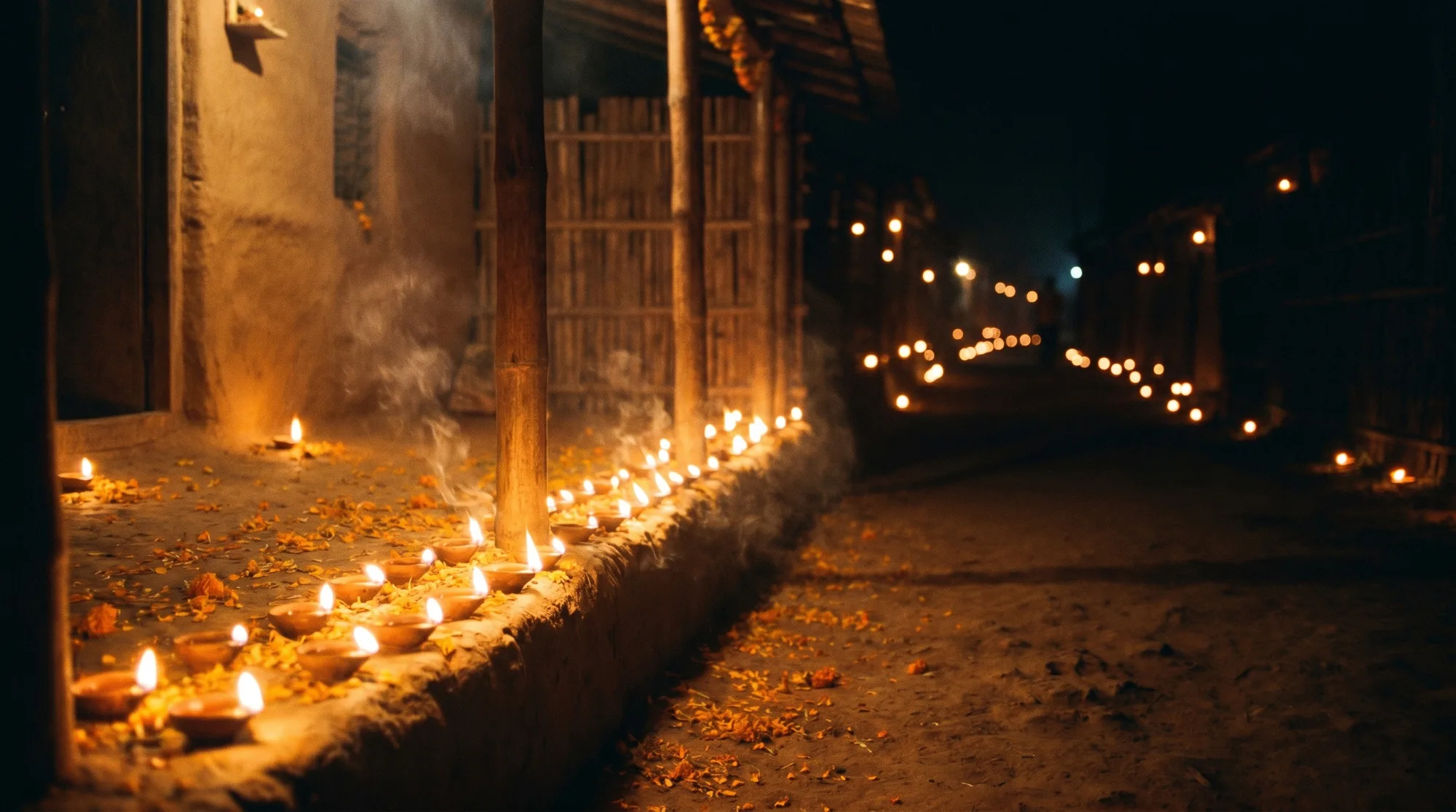
Tihar lights
Rows of tiny oil lamps along mud verandas, turning the poorest lane into a river of light.
Christmas mornings
Carols drifting from the camp church, paper stars in the windows, and shared sweet bread — the Christian families lighting up midwinter for the whole lane.
First exam results
Names read aloud, sweets passed hand to hand — the whole sector celebrated every pass.
Weddings
Borrowed saris, shared cooking pots, three days of music — proof that joy never asked for permission.
07Faith & Community
Strength Together
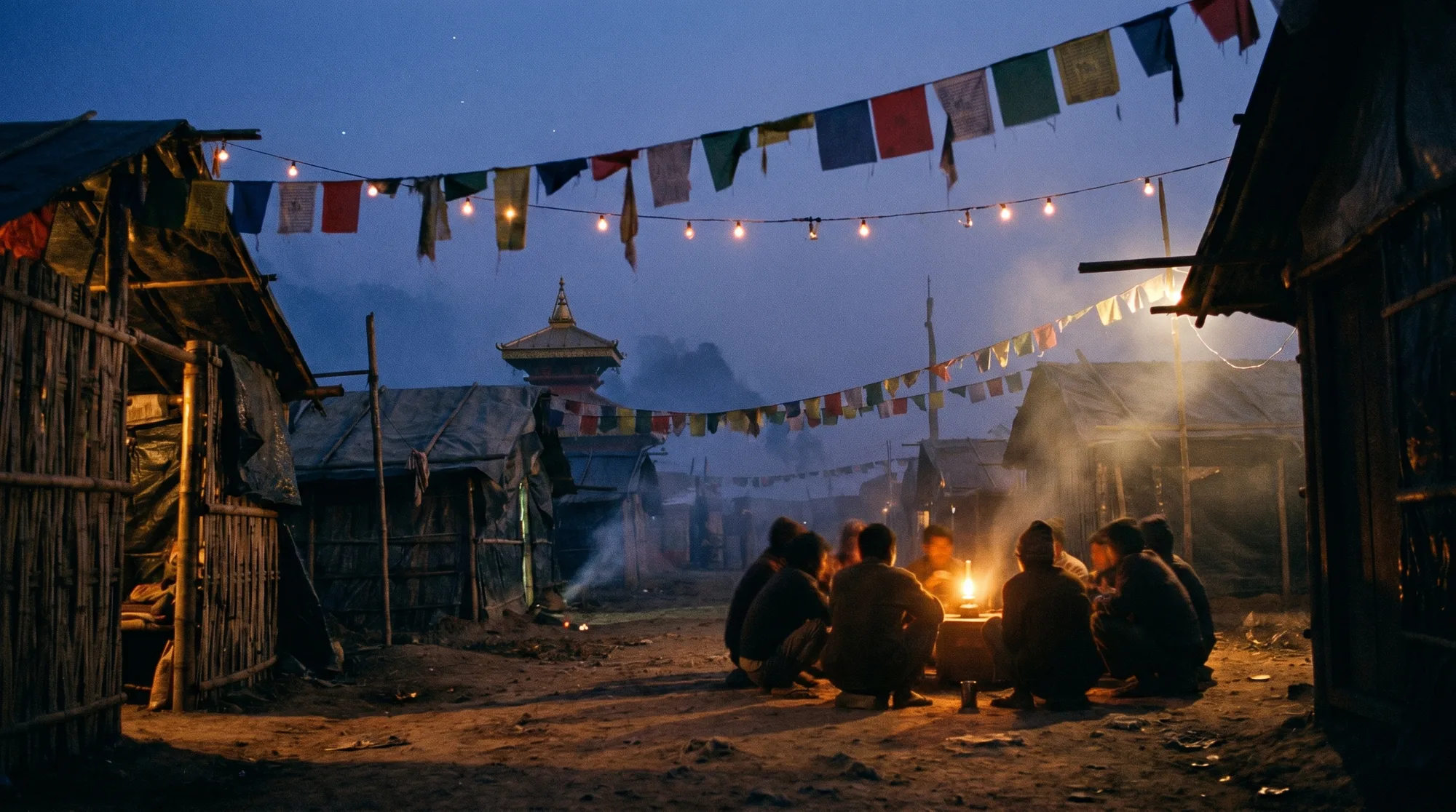
Hindu temples, Buddhist gumbas, kirat shrines, and churches stood within the same few square kilometres, and festival days belonged to everyone. Bhajans and prayers drifted over the huts at dusk.
Community was the camps’ real infrastructure: elders settling disputes under trees, women’s groups, youth clubs, volunteer teachers, neighbours who shared rice in the lean weeks. No one survived those years alone — that was the point.
“We had nothing, so we shared everything.”
08Memory Map
Places We Remember
Seven camps stood across the Jhapa and Morang districts of eastern Nepal. Touch a lantern to revisit one. Positions are stylised, not to scale.
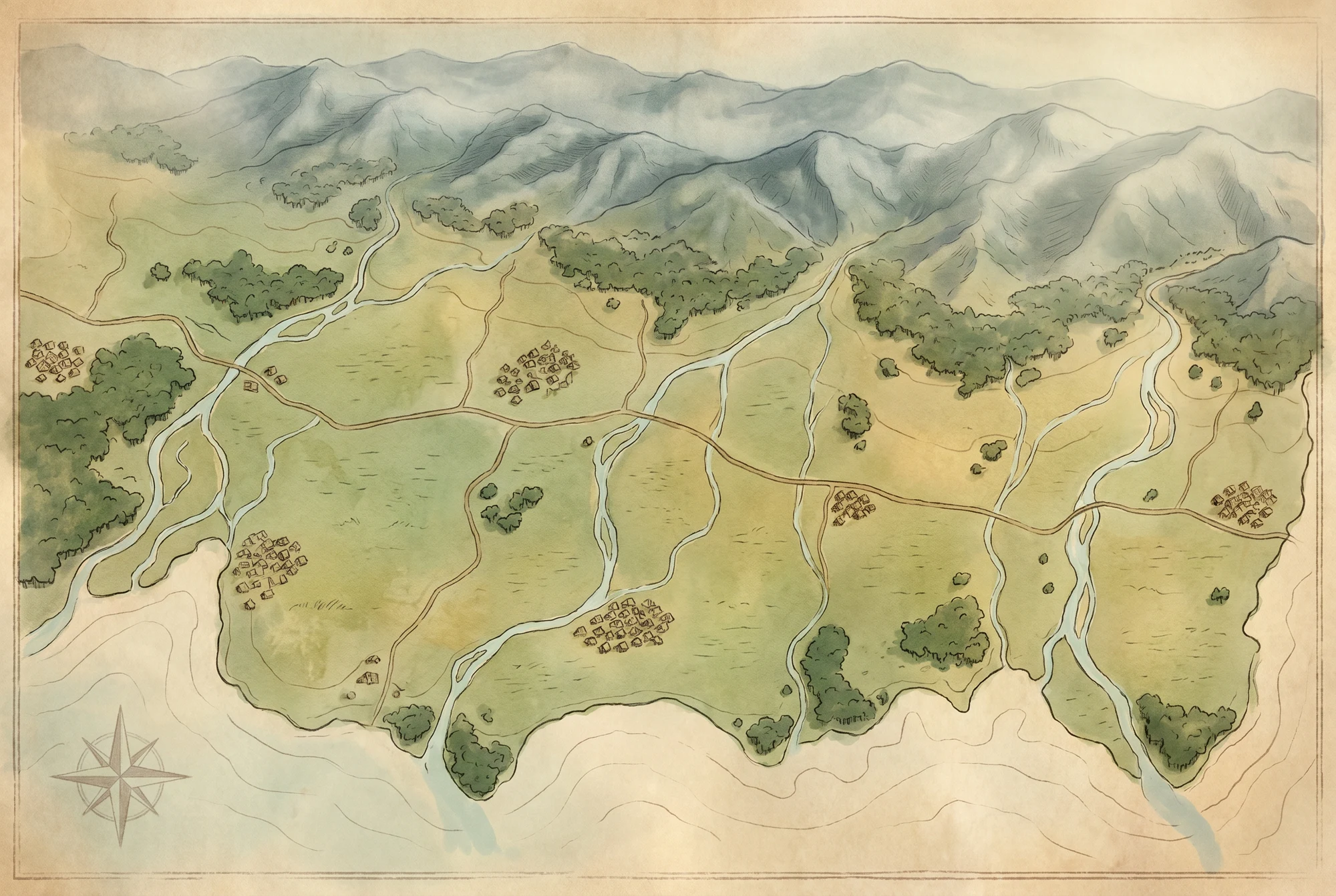
Map base AI-rendered; camp positions are stylised, not to scale.
near Damak
Beldangi II
The biggest single camp — tens of thousands of people, and one of the last still open.
If you lived here, this map is yours — share what you remember.
09Voices
Voices From the Camps
These sample voices are illustrative composites, not real testimonies. Real stories will appear here only with each storyteller’s permission.
“I was born in Beldangi II and saw Bhutan only in my mother’s songs. Now I sing them to my daughter in Ohio, and the camp lives inside the melody.”
“The ration line taught me arithmetic before school did. So many coupons, so many kilos, so many mouths. I became an accountant. I still count carefully.”
“When our hut burned, I cried for my books. The next morning my teacher gave me his own. That is the camp I choose to remember.”
10Resettlement
From Camp to New Countries
In 2007, after years of stalled talks, a group of countries offered third-country resettlement. From 2008 onward, buses left the camps for Kathmandu, and planes carried families to places most had only seen on classroom maps.
It became one of the largest resettlement programmes in UNHCR’s history — well over a hundred thousand people beginning again, the great majority in the United States. Leaving was a joy and a grief at once: a future gained, a whole world of lanes and neighbours left behind.
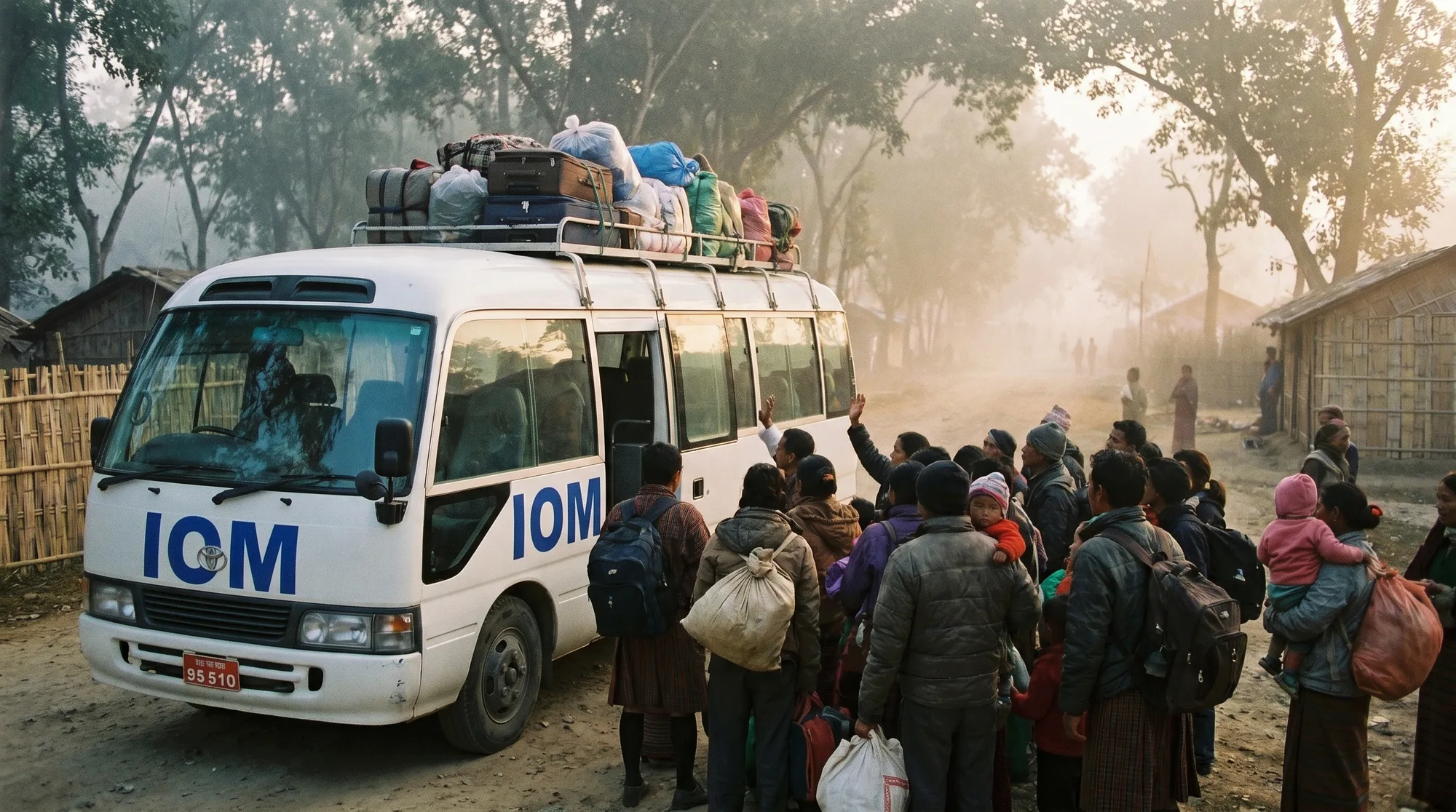
International Organization for Migration (IOM) buses carried families from the camps to Kathmandu, and from there to flights around the world.
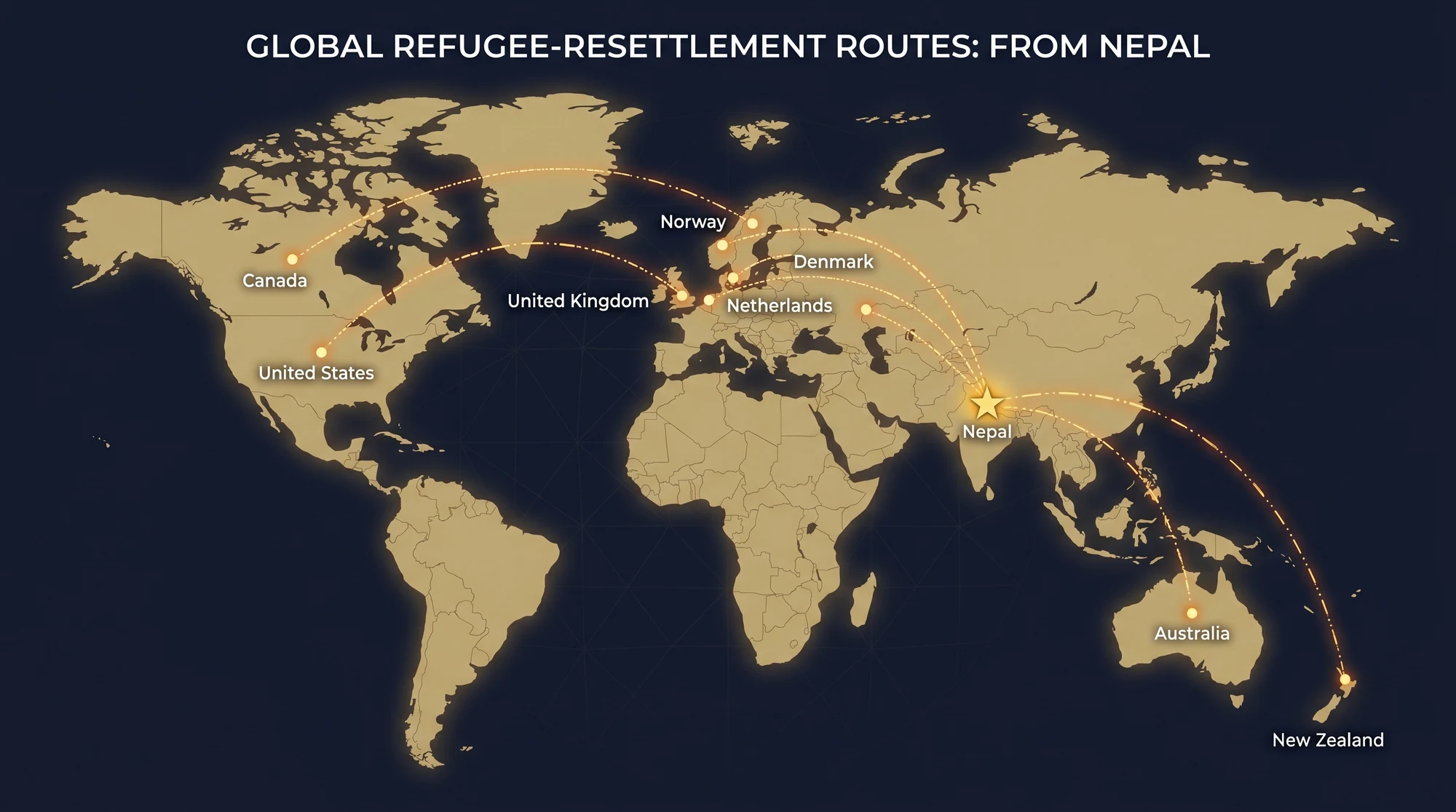
Eight countries welcomed families from the camps; dotted lines trace the resettlement routes from Nepal.
11Legacy
We Remember
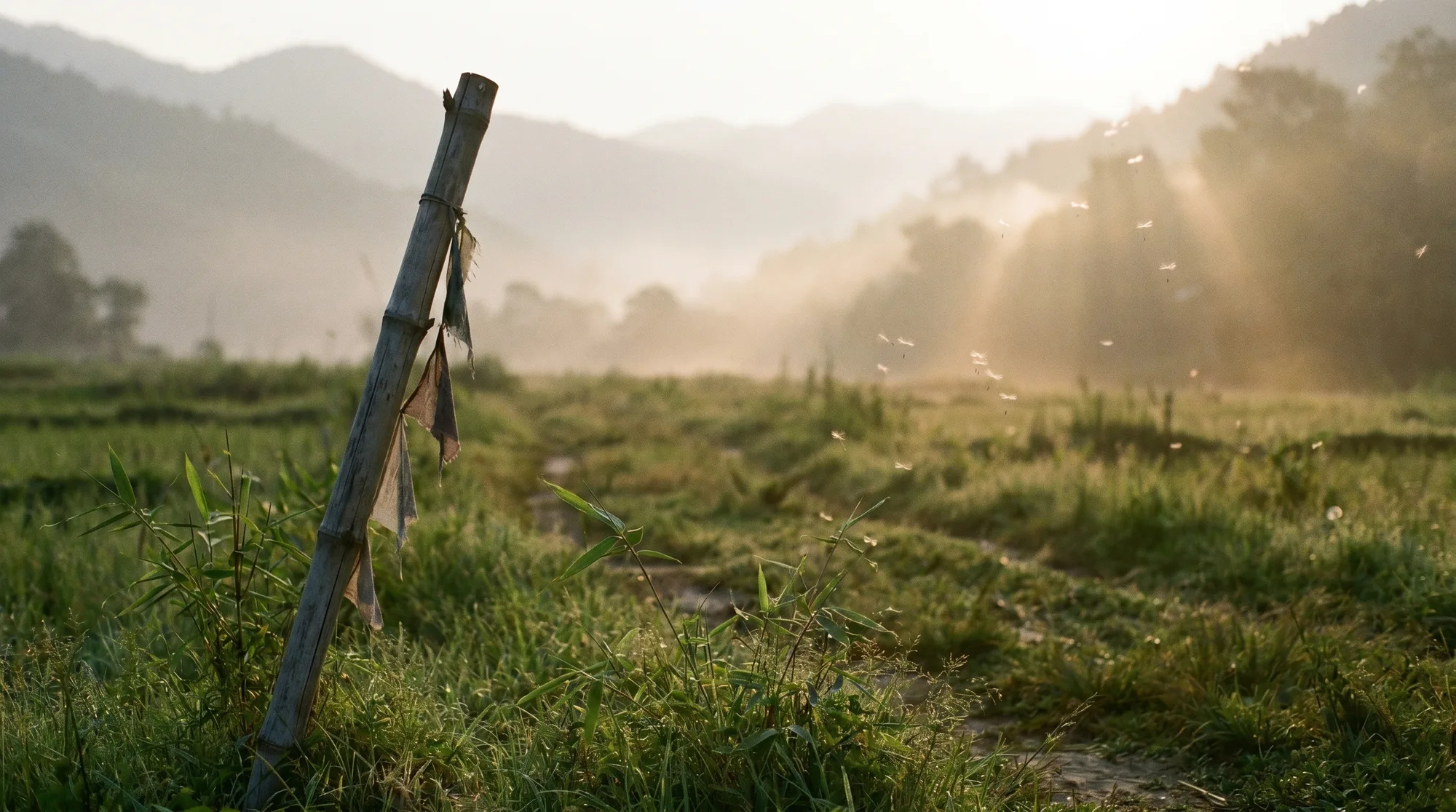
The bamboo has been folded back into the earth, and grass grows where the lanes were. But the camps did not end — they dispersed, carried in a hundred thousand memories to new cities and new kitchens, where the same songs are still sung.
This archive exists for the generation born after: so they know what their parents and grandparents endured, built, and refused to let break them. A people’s history is a home no one can take away.
If you remember the camps, your story belongs here.